
Choosing Cups and Sealing Film for Jelly, Curd and Pudding: A Practical Guide for Food Brands
Choosing the right cup and sealing film is essential for leak-proof, fresh and attractive food packaging. Learn how to match PP, PS and PET cups with compatible lidding films, compare pre-cut lids and roll film, and optimise machine settings for jelly, curd, pudding and other food products.
You can buy the best cup filling and sealing machine in the market and still end up with leaking cups. Why? Because the seal depends on three things working together: the machine, the cup and the sealing film. Many food brands spend weeks choosing a machine and only minutes choosing their packaging material. This guide helps you get all three right, so your jelly, curd, pudding or gluco drink cups reach the customer clean, sealed and fresh.
How Cup Sealing Works
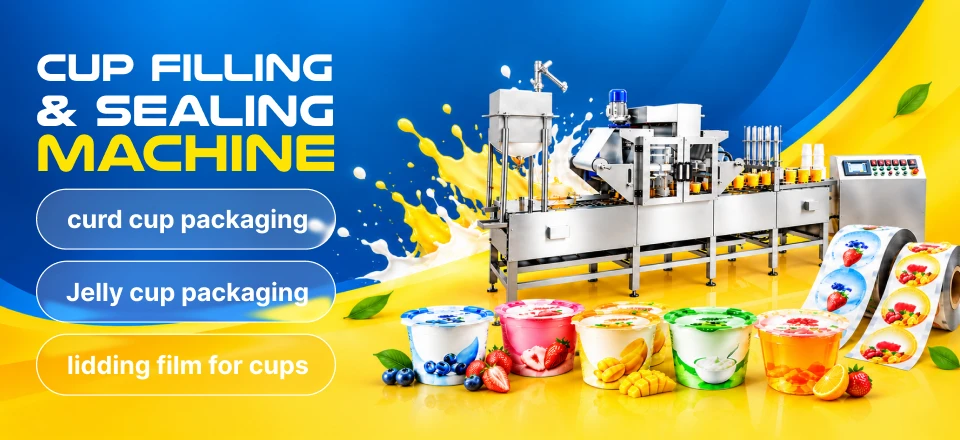
On a cup filling and sealing machine, cups are placed into cavities, filled with product and then covered with a lidding film. A heated sealing head presses the film onto the rim of the cup. The heat melts a thin sealing layer on the film, which bonds to the cup rim. A cutter then trims the film to shape.
For this bond to form properly, the sealing layer on the film must be compatible with the cup material. That is the single most important rule in cup packaging.
Step 1: Choose the Right Cup Material
The common cup materials in India are:
| Cup Material | Typical Uses | Points to Note |
|---|---|---|
| Polypropylene (PP) | Curd, jelly, pudding, desserts | Good heat resistance, widely used |
| Polystyrene (PS) | Curd, dairy desserts | Clear or white, rigid, good for display |
| PET | Clear dessert and beverage cups | Excellent clarity |
Ask your cup supplier for the exact material and, if possible, a sample batch for sealing trials on your machine.
Product temperature matters: If you hot-fill a product such as jelly, the cup must withstand that temperature without deforming.
Step 2: Match the Sealing Film to the Cup
Lidding films are usually multi-layer laminates. The outer layer carries your print, a middle layer provides strength and barrier, and the inner sealing layer bonds to the cup. Your film supplier must know your cup material so they can provide a matching sealing layer.
Key properties to discuss:
- Seal strength: Strong enough to survive transport, but not so strong that customers cannot peel it.
- Peelability: Many brands prefer an easy-peel lid, especially for children’s products like jelly cups.
- Barrier: Oxygen and moisture barrier help protect shelf life.
- Printability: Your brand, ingredients, batch and expiry details must be clear.
Step 3: Pre-Cut Lids or Roll Film?
Cup sealing machines use either:
- Pre-cut lids: Individual foil or film lids placed on each cup. Simple, common on smaller machines.
- Roll film: A continuous film sealed and cut on the machine. Usually cheaper per cup at higher volumes and better suited to multi-cavity machines.
Your machine design determines which you can use, so decide this together with your machine supplier.
Step 4: Get the Machine Settings Right
Even with the right cup and film, three machine settings decide seal quality:
- Temperature: Too low and the film will not bond. Too high and it may burn, wrinkle or stick to the sealing head.
- Pressure: Even pressure across the full rim ensures there are no weak spots.
- Dwell time: The time the sealing head stays down. Longer dwell improves bonding but reduces speed.
Good operator training helps your team find the ideal combination for each cup and film, and record it for future batches.
Step 5: Keep the Rim Clean
Product splashed on the cup rim is the most common cause of weak seals. Jelly, curd and pudding are especially likely to drip. To prevent this:
- Use accurate, drip-free filling nozzles.
- Set the correct fill level, leaving enough headspace.
- Clean nozzles regularly during production.
Matching Cup Formats to Products
| Product | Typical Concerns | Machine to Consider |
|---|---|---|
| Jelly cups | Hot filling, bright colours, easy-peel lids for children | Jelly / pudding cup filling and sealing machine (6-head or 24-cavity) |
| Pudding and desserts | Thick product, clean rim | Cup fill-seal machine with suitable nozzles |
| Curd (dahi) | Dairy hygiene, cold chain | Rotary curd cup filling and sealing machine |
| Gluco and ORS drinks | Leak-proof seal, liquid product | Gluco cup filling and sealing machine |
How to Test Your Seal
Before you go into full production, run these simple checks:
- Squeeze test: Press the sealed cup gently. No product should escape.
- Inversion test: Hold cups upside down for a set time and check for leaks.
- Peel test: Peel lids by hand to check they open cleanly and evenly.
- Transport test: Pack a carton and send it on a real delivery route, then inspect the cups.
Record the results, along with the machine settings, cup batch and film batch used.
Common Mistakes Food Brands Make
- Changing cup or film suppliers without re-testing seals
- Choosing film only on price, without checking compatibility
- Overfilling cups so product touches the rim
- Skipping daily cleaning of the sealing head
How Civet India Helps
Civet India manufactures cup filling and sealing machines for jelly, pudding, curd and gluco drinks, including 6-head and 24-cavity jelly cup models and rotary curd cup machines. We customise machines to your cup size and help you run sealing trials during installation, so you start production with confidence. Every machine comes with operator training, a 12-month warranty and 24/7 support with genuine spares across India.
Frequently Asked Questions
Can I use the same film for PP and PS cups?
Not always. The sealing layer must suit each cup material, so check with your film supplier.
Why do my cups leak only at one side?
Uneven pressure, a damaged sealing head or product on the rim are the usual causes.
Can one machine handle different cup sizes?
Often yes, with change parts. Ask us about your specific sizes.
Get Expert Advice
Planning a new cup product or fixing leaking seals? Call or WhatsApp +91 8334957009 or visit civetindia.com.