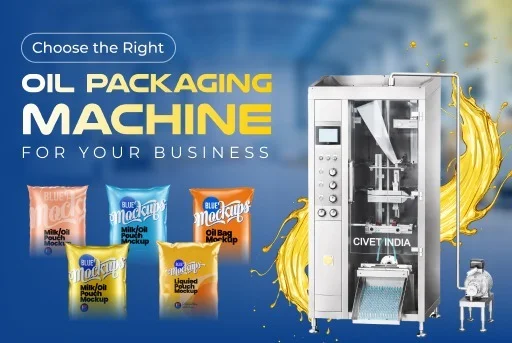

How to Choose the Right Oil Packaging Machine for Your Business
From viscosity and output speed to pouch size and budget — a practical guide to comparing our C-LAX15, C-LAX-20 and C-LAX-40 oil FFS machines before you invest.
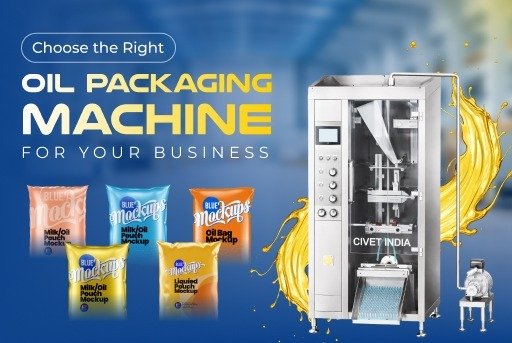
Buying an oil packaging machine is a capital decision that affects your plant's output, labour cost and product quality for years. Here's how to choose an FFS machine that fits your business today and scales with it tomorrow.
Why the Right Oil Packaging Machine Matters
An undersized or mismatched oil packaging machine shows up on your balance sheet fast — through inconsistent pouch weight, product wastage, frequent breakdowns and operators who can't hit daily targets. The right machine, on the other hand, protects your fill accuracy, keeps your line running, and gives you room to add shifts or SKUs without replacing the equipment in a year.
Understanding Your Product: Viscosity & Flow Characteristics
Refined edible oil, vanaspati and ghee don't flow the same way, and your filling system has to account for that. Low-viscosity oils fill easily with standard gravity or piston dosing, while thicker, semi-solid products often need heated hoppers and pipelines to stay pourable. Always confirm your product's viscosity range with the manufacturer before finalising a dosing mechanism.
Key Factors to Consider Before You Buy
1. Output Speed & Production Volume
Match the machine's pouches-per-minute rating to your actual demand, not just today's order book. Under-buying capacity forces overtime and second shifts; over-buying ties up capital in speed you won't use for years.
2. Pouch Size & Packaging Format Range
If you sell multiple pack sizes — say 100 ml sachets alongside 1 L pouches — check how quickly the machine changes over between formats. A wide, tool-free adjustment range saves hours of downtime every changeover.
3. Budget & Return on Investment
Compare machines on total cost of ownership, not sticker price alone — factor in spare parts, power consumption, wastage reduction and the labour you save by automating a manual filling line.
4. After-Sales Support & Spare Parts Availability
A packaging line that's down for a week waiting on a spare part costs far more than the part itself. Choose a manufacturer with a responsive service network, genuine spares in stock, and remote diagnostics support.
Comparing CIVET India's Oil Packaging Machine Range
Our C-LAX series covers small units to high-volume FMCG lines. Here's a quick comparison to help you shortlist the right model:
| Model | Output | Pouch Size Range | Best Suited For |
|---|---|---|---|
| C-LAX15 | Up to 15 pouches/min | 100 ml – 500 ml | Small & medium units, low-viscosity oils |
| C-LAX-20 | Up to 20 pouches/min | 200 ml – 1 L | Mid-size plants, mixed pouch sizes |
| C-LAX-40 | Up to 40 pouches/min | 500 ml – 5 L | High-volume FMCG lines, bulk packs |
“The right packaging machine doesn't just fill pouches — it protects your margins, your brand consistency and your production uptime.”
— CIVET India Engineering Team
Common Mistakes to Avoid When Buying an Oil Packaging Machine
- Buying on price alone — the cheapest machine is rarely the cheapest to run once wastage and downtime are factored in.
- Ignoring product viscosity — a dosing system built for thin oil will struggle with vanaspati or ghee.
- Skipping the after-sales check — confirm service response time and spare parts availability before you sign.
- Overlooking quality certification — an ISO 9001:2015 certified manufacturer follows documented QC at every build stage.
- Not planning for growth — leave headroom for higher output or additional pouch formats.
Final Checklist Before You Invest
- Confirm your product's viscosity and the required filling/dosing method.
- Match output speed (pouches/min) to your real production demand.
- Check pouch or bottle size flexibility and changeover time.
- Verify the manufacturer's ISO 9001:2015 certification and QC process.
- Confirm installation, commissioning and operator training are included.
- Ask about AMC plans and genuine spare parts availability.
Conclusion
Choosing an oil packaging machine comes down to matching your product, your output targets and your budget to the right FFS platform — backed by a manufacturer who'll support it for years, not just install it and move on. Our engineering team is happy to review your product and output requirements and recommend the right C-LAX model for your line.