
5 Signs Your Business Has Outgrown Manual Packaging
5 Signs Your Business Has Outgrown Manual Packaging Most manufacturers start small. A few workers, a table, some pouches or bottles, and a lot of hand work. It works fine at first. Then orders grow, a...
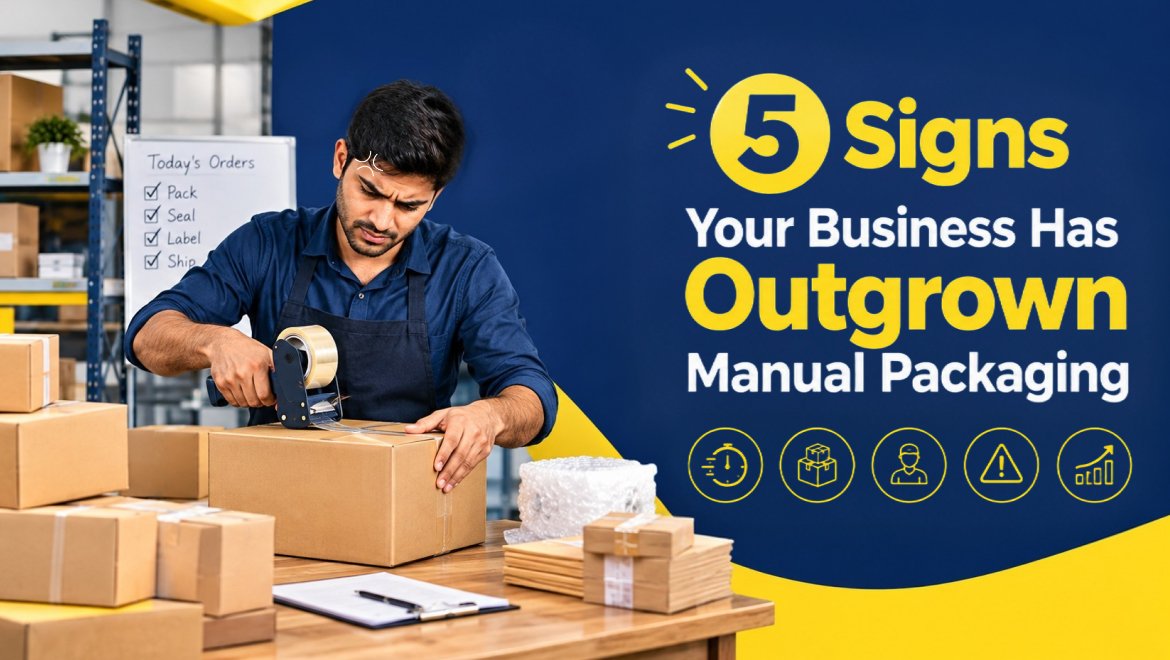
- Most manufacturers start small. A few workers, a table, some pouches or bottles, and a lot of hand work. It works fine at first. Then orders grow, and the same process that once felt manageable starts to slow everything down.
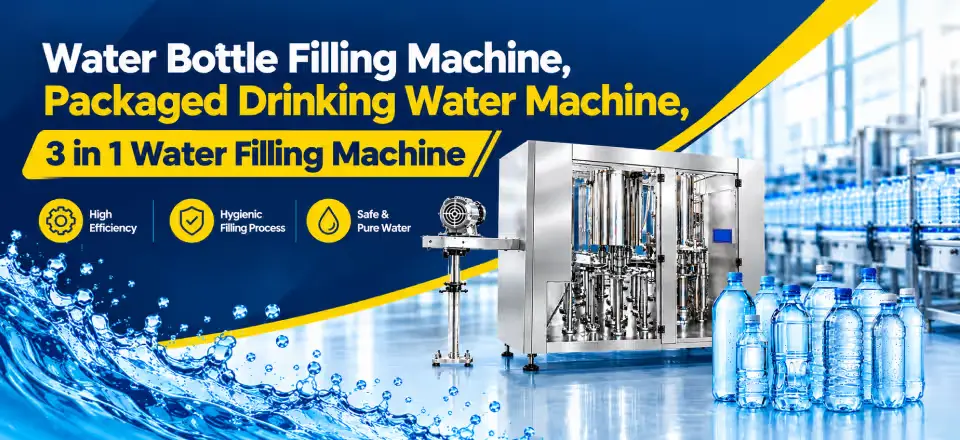
If you are running a food, beverage, or FMCG unit and wondering whether it is time to move on from manual packaging, here are five signs worth paying attention to. We will also look at what to consider when you are ready to invest in an automatic packing machine or a water filling machine for your line.
1. Your output is limited by hands, not by demand
This is usually the clearest sign. You have buyers ready to place larger orders, but your packing line cannot keep up. Manual packing depends on how many workers you have on the floor that day, how fast they work, and how many hours they can put in without fatigue setting in.
When demand crosses what your team can physically pack in a shift, you are no longer choosing to stay manual. You are being held back by it. An automatic packing machine removes this ceiling. Machines run at a fixed, predictable speed for as long as you need them to, shift after shift, without needing more people on the floor.
2. Product quality and packing consistency vary from batch to batch
Manual packing brings human variation into the process. One worker seals a pouch a little tighter than another. Fill weights drift because scooping and measuring by hand is never perfectly repeatable. A bottle gets capped slightly loose and leaks in transit.
None of this happens because your team is careless. It happens because hands are not built for repeated precision at scale. Customers and retailers notice these inconsistencies before you do, often through complaints or returns. A well-set-up packaging line, whether it is a pouch filler or a water filling machine, holds fill volume, seal quality, and pack weight steady across thousands of units. That consistency is hard to get any other way.
3. Labor costs and dependency are becoming a real risk
Manual packing needs people, and people come with real costs beyond wages. There is training time for every new hire, absenteeism during peak season, and turnover that never seems to stop. In many regions, skilled packing labor is also getting harder to find and retain.
If a big order comes in right when two of your packers are out sick, your delivery timeline is suddenly at risk. This is not a hypothetical. It happens to growing units more often than owners like to admit. Automating even part of your packing process, through the right packaging machinery, reduces how much your output depends on any single day's attendance.
4. You are turning down orders or missing delivery dates
This is the sign that hurts the most because it shows up directly in lost revenue. When a buyer asks if you can supply a larger volume and the honest answer is no, or when you accept the order and then scramble to meet the deadline, manual packing has already become the bottleneck in your business, not your production or your sales.
Growing units often do not realize how much business they are quietly losing this way. A reliable packaging solution built around your actual product, whether it is pouches, bottles, cups, or sachets, lets you say yes to bigger orders with confidence instead of hesitation.
5. You are expanding your product range and manual work cannot keep pace
Adding a new SKU is exciting until you realize your packing team now needs to handle a second product with different fill volumes, pack sizes, or packaging formats, using the same hands and the same hours in a day. Manual processes do not scale well across variety. Every new product adds training time and room for error.
Machinery built for flexibility, such as multi-head fillers or adjustable FFS machines, can switch between formats with far less disruption than retraining a manual team each time. If your product catalog is growing faster than your packing capacity, this is worth addressing before it becomes a bigger problem.
What to consider before you switch
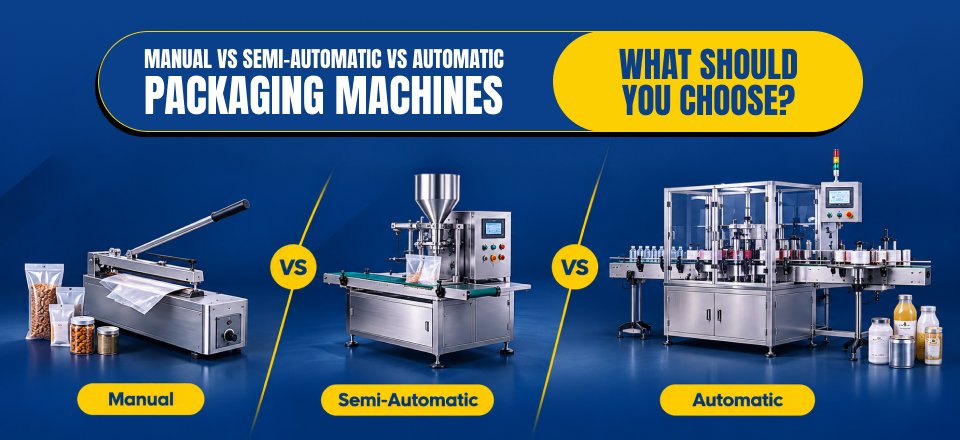
Recognizing these signs is the easy part. Choosing the right equipment is where many businesses hesitate, and that hesitation is understandable. A packing machine is a real investment, and the wrong choice can be as costly as staying manual too long. A few things are worth checking before you commit.
Match the machine to your actual product. A water filling machine built for still water will not necessarily suit viscous liquids or products with particulates. Pouch packing needs differ by film type and product density. Be specific about what you are packing, not just the category.
Ask about after-sales support. Machinery breaks down occasionally, that is normal. What matters is how quickly a packaging machinery supplier can get an engineer to you and how easily you can source spare parts. A machine with no local service backing becomes a liability the day it stops running.
Look for customization, not just a standard model. Your product, your pack sizes, and your production goals are specific to your business. A supplier willing to adjust specifications, rather than sell you a fixed catalog item, usually gives you a better long-term fit.
Think about total cost, not just the machine price. Factor in maintenance, spare parts, power consumption, and the labor you will still need to run and supervise the line. A cheaper machine with poor support can end up costing more over three years than a slightly pricier one backed by proper service.
Where Civet India fits in
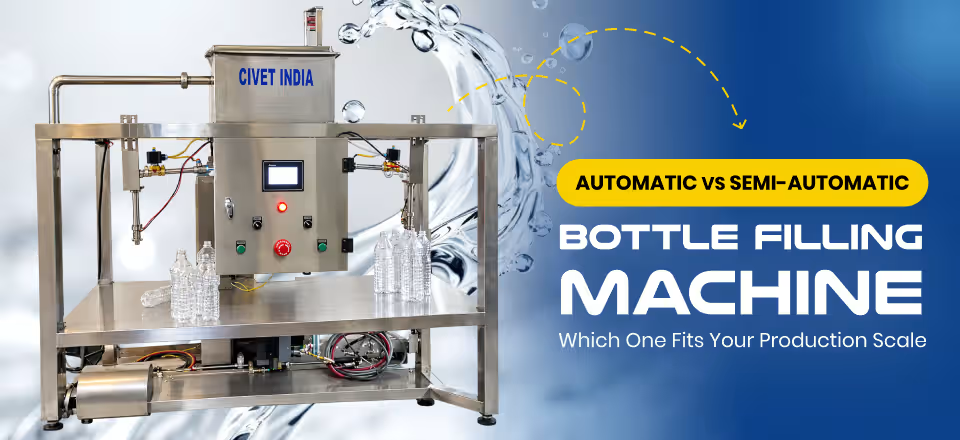
Civet India is an ISO 9001:2015 certified manufacturer of packaging machinery, based in Kolkata, West Bengal, working with food and beverage businesses since 2018. We build automatic packing machines, water filling machines, FFS machines, shrink packaging equipment, cup fillers, and bottle capping lines, and we customize specifications to match what our customers actually produce, not just what fits a standard mold.
Our team also handles installation, commissioning, and after-sales service, so a breakdown does not turn into a week of lost production. If any of the signs above sound familiar, it may be time to have a conversation about the right packaging solutions for your line.
Manual packing is not a mistake. It is simply a stage most businesses grow past. The question is whether you make that move on your own terms, with a plan, or wait until missed orders and rising costs force the decision for you.